
From Hydrocarbon Reserves to Energy Hub: Egypt’s Long-Term Vision for Sustainable Fossil Fuel Development and Renewable Integration
Karim Badawi, Egypt's Minister of Petroleum and Mineral Resources, announces new exploration strategy aimed at boosting production and attracting global investment
Cairo, Egypt — Egypt is set to embark on a bold new energy exploration initiative with a commitment to invest over $5.7 billion in the development of its oil and gas sector. The announcement was made by Karim Badawi, Egypt's Minister of Petroleum and Mineral Resources, who detailed a five-year plan to drill 480 new wells across various locations in the country.
The ambitious project, which will span from 2026 to 2031, aims to tap into Egypt's untapped hydrocarbon reserves, positioning the country as a key player in the global energy market. Badawi emphasized that this initiative is part of Egypt's broader strategy to boost domestic production and increase its energy export capacity, reducing reliance on energy imports and contributing to economic growth.
Project Overview and Timeline
Under the five-year plan, Egypt will drill 480 wells—comprising both oil and gas wells—in strategic locations across the country. These wells will be spread across both onshore and offshore fields in the Mediterranean Sea, the Nile Delta, and the Western Desert, among other locations. The exploration efforts are expected to ramp up over the first two years, with initial drilling scheduled for 2026.
Badawi highlighted that drilling activities will begin in the Mediterranean Sea, where significant potential has already been identified. He also noted that the Western Desert and Nile Delta have untapped reserves that, if successfully harnessed, could significantly bolster Egypt’s energy resources.
The timeline includes a series of exploration phases, with early results anticipated in 2027. By the end of the five-year period, Egypt plans to increase oil and gas output by a substantial margin, enabling it to fulfill rising domestic demand and expand its role as an energy exporter.
Key Participants and Partners
The success of this plan hinges on collaboration between the Egyptian government and international energy companies. Egypt's Ministry of Petroleum is expected to partner with global oil and gas giants, as well as regional players, to undertake the exploration and development of these wells. The government has already initiated talks with some of the world's most influential energy companies, including BP, Shell, TotalEnergies, and ExxonMobil, to form strategic alliances.
To bridge the demand-supply gap, the ministry significantly expanded its operations since July 2024 from exploration and production activities to developing its mature fields as well as leasing four floating storage and regasification units at Ain Sokhna and Damietta ports to secure energy, industrial and local demands.
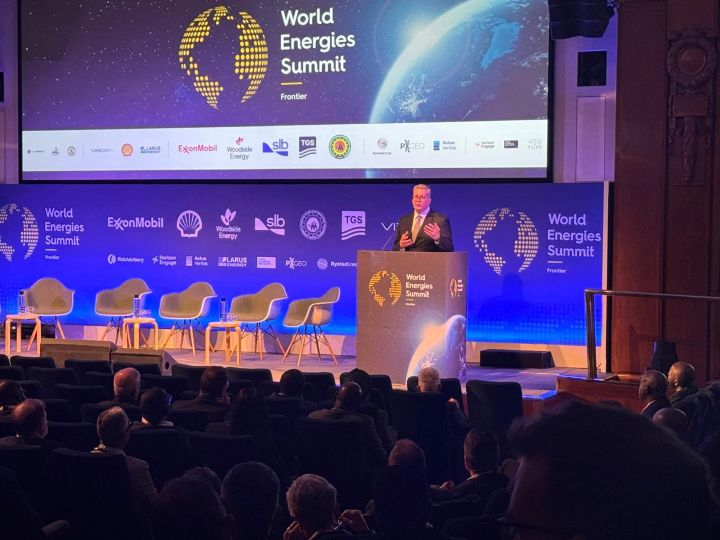
In addition to Eni's plans to invest $8 billion in Egypt through 5 years, bp will allocate $5 billion for new exploration activities,Badawi told attendees of the London Summit. Furthermore, four new exploration agreements valued at over $340 million were signed with Eni, Shell, and Arcius Energy.
Geographic Locations and Exploration Focus
While the specific locations for the exploration are yet to be fully disclosed, several key regions have been earmarked for drilling, based on geological studies and past exploratory efforts:
Karim Badawi noted that in 2026 alone, 101 wells are scheduled to be drilled across Egypt's key regions: 67 in the Western Desert, 14 in the Mediterranean Sea, 9 in the Gulf of Suez, and 6 in the Nile Delta. This ambitious program is expected to make a direct contribution to boosting national production levels
The country's focus on offshore exploration, particularly in deeper waters, reflects an increasing trend in the global oil and gas industry to push the limits of technology and expand into harder-to-reach locations.
Economic Impacts and Future Projections
The exploration and subsequent development of new oil and gas reserves are expected to have wide-reaching economic benefits. The project will generate significant direct and indirect employment, not only in the drilling and production phases but also in the expansion of supporting industries such as infrastructure, manufacturing, and transportation.
Additionally, increased energy production is expected to strengthen Egyp's position as an energy exporter, particularly to Europe and neighboring markets in the Middle East and Africa. The country is already a key exporter of liquefied natural gas (LNG), and the new exploration initiatives will enable Egypt to scale up LNG production, further diversifying its energy exports.
As a major part of its economic strategy, Egypt is prioritising the expansion of petrochemical production and exports, targeting $4.2bn in petrochemical exports by 2030, compared to $2.4bn projected for 2025, as part of Egypt's broader industrial and energy diversification goals.
Long-term Vision: Sustainability and Innovation
In a further push toward sustainability, Egypt plans to integrate advanced technologies and innovative solutions in its exploration efforts. The use of AI-driven data analytics, remote monitoring systems, and eco-friendly drilling technologies will be central to minimizing the environmental impact of exploration activities.
The country has also committed to aligning its oil and gas industry with global environmental standards, setting a long-term vision that integrates both fossil fuel development and renewable energy growth in a sustainable manner. Egypt's role as a regional energy hub could position it as a leader in bridging the gap between conventional energy resources and cleaner, renewable energy technologies.

